








What Are the Four Attachment Styles?
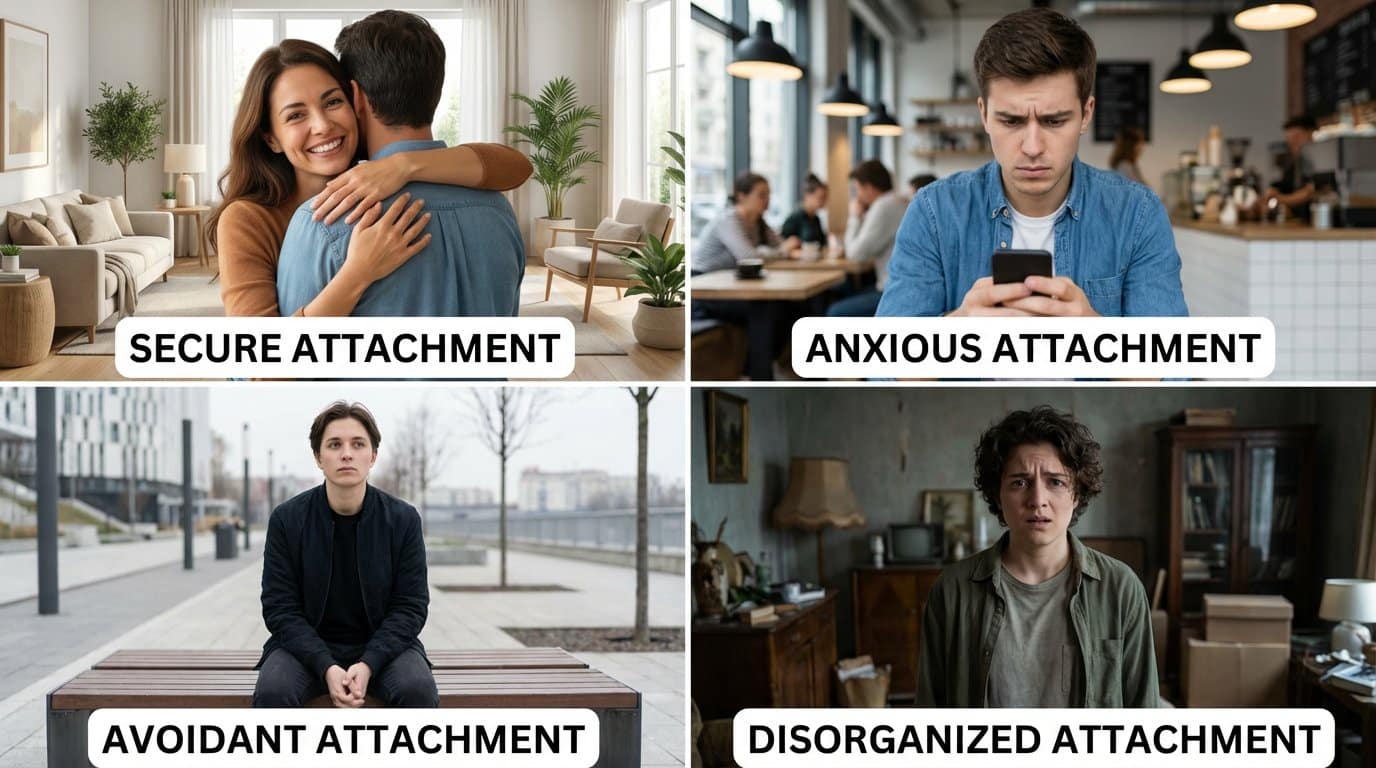
Four distinct attachment styles shape how you connect with others throughout your life, each rooted in your earliest experiences with caregivers. Attachment theory identifies these patterns as secure attachment, anxious attachment, avoidant attachment, and disorganized attachment. This framework emerged in the mid-20th century through the pioneering work of British psychoanalyst John Bowlby and American-Canadian psychologist Mary Ainsworth.
Your childhood experiences with caregiving directly influence your emotional bonds and adult relationships. Secure attachment develops when you receive consistent, reliable care, fostering trust and healthy emotional regulation. Anxious attachment emerges from inconsistent caregiving, creating fear of abandonment. Avoidant attachment forms when caregivers are emotionally unavailable, leading you to suppress intimacy needs. Disorganized attachment results from traumatic or chaotic environments, producing conflicting desires for closeness and distance. Research shows that women tend to score higher on anxiety while men score higher on avoidance in relationships, though these gender differences don’t directly determine attachment style.
Understanding your attachment style helps you recognize patterns affecting your relationships and guides your path toward healthier connections. While early caregiver relationships establish your social-emotional foundations, change remains possible throughout your lifespan.
How to Identify Your Own Attachment Style
Recognizing your attachment style often begins with honest self-reflection about how you behave in close relationships. Consider your comfort with intimacy and vulnerability, do you welcome closeness or pull away when partners get too near? Examine your trust patterns and whether you worry about rejection or abandonment.
Your emotional regulation during conflict reveals important clues about your attachment styles. Notice if you seek constant reassurance, prioritize self-reliance over connection, or oscillate between craving and fearing intimacy. These mental patterns, called working models, were formed through interactions with your early caregivers and help guide your expectations and behaviors in relationships. Be aware that those with dismissive-avoidant attachment are most likely to mis-type themselves as secure, making accurate self-assessment particularly challenging.
Validated tools like the Relationship Questionnaire can help classify your style by measuring your views of self-worth and others. Understanding whether you experience security or anxiety in bonds provides essential emotional awareness. This knowledge empowers you to identify patterns rooted in childhood and work toward healthier, more fulfilling connections. The good news is that through therapy and supportive relationships, you can reshape relational habits and develop a more secure attachment style over time.
Why Children Inherit Their Parents’ Attachment Patterns

Once you’ve identified your own attachment patterns, a natural question emerges: where did these tendencies come from? Research reveals that intergenerational transmission of attachment styles occurs through multiple pathways rooted in early relationships and family dynamics.
Your attachment style didn’t emerge in a vacuum, it’s a legacy shaped by generations of family relationships.
Your parent-child relationships shape attachment through three key mechanisms:
- Parental attunement and responsive caregiving, When caregivers consistently meet your emotional needs, you develop secure attachment. Withdrawn or fear-provoking responses create insecure attachment patterns. Children who experience responsive and contingent parenting tend to become more resilient and competent adults.
- Epigenetic mechanisms, Parenting style actually alters infant DNA methylation, with consistent caregiving producing distinct molecular profiles linked to resilience. These molecular changes have been observed as early as 3 months of age.
- Behavioral modeling, Studies show 55% exact agreement between infant and maternal attachment categories, demonstrating how parents unconsciously replicate their own early experiences.
Understanding these pathways empowers you to recognize inherited patterns and intentionally create healthier family dynamics for future generations. Research also indicates that a positive marital relationship between parents supports the development of secure attachment in their children.
How Insecure Attachment Affects Adult Relationships
When you carry insecure attachment patterns into adulthood, expressing your needs and understanding your partner’s perspective often becomes a significant struggle. You might find yourself either shutting down emotionally or escalating conflicts in ways that push your partner away, creating cycles of misunderstanding and disconnection. Research shows that anxiously attached individuals are more likely to report anger and hostility during partner conflict, viewing disagreements as threats to the relationship itself. These communication breakdowns don’t just cause momentary friction, they gradually erode the foundation of trust and security that relationships need to thrive. Over time, partners of anxious individuals often tire of providing reassurance, while partners of avoidant individuals may withdraw their support altogether, deepening the cycle of disconnection. These insecure attachment styles frequently originate from adverse childhood experiences, particularly emotional abuse and neglect that disrupted healthy attachment development during formative years.
Communication Challenges Emerge
Although secure attachment fosters open dialogue and emotional safety, insecure attachment patterns create distinct communication barriers that can undermine adult relationships. When your caregiver provided inconsistent caregiving, you may now struggle with abandonment fears that fuel constant reassurance-seeking. If you experienced an emotionally unavailable parent, you might default to emotional distance during vulnerable conversations.
These patterns manifest differently based on your attachment style:
- Anxious attachment drives emotional enmeshment and overanalyzing every interaction for signs of rejection
- Avoidant attachment creates difficulty expressing needs, appearing dismissive during conflict
- Fearful-avoidant attachment produces trust issues and emotional dysregulation, causing you to vacillate between seeking closeness and withdrawing
Understanding these communication challenges helps you recognize reactive patterns stemming from early experiences rather than present-moment realities, opening pathways toward healthier relational dynamics. The good news is that secure attachment can be earned later in life through therapeutic approaches like attachment-focused EMDR, which helps change internal beliefs about relationships.
Relationship Stability Suffers
Because insecure attachment disrupts your ability to regulate emotions effectively, relationship stability often becomes one of the first casualties. When early trauma, abuse, or neglect shapes your relational blueprint, you may struggle with conflict resolution and maintaining healthy boundaries. The push-pull dynamic common in disorganized attachment creates cycles where you crave closeness yet withdraw when intimacy deepens.
If you’re anxiously attached, you likely seek constant reassurance while fearing abandonment. Your partner’s emotional availability becomes the measure of your worth. Avoidant patterns drive you toward excessive independence, making it difficult to validate feelings, both yours and your partner’s.
These patterns aren’t permanent sentences. Through therapeutic work and intentional relationship building, you can develop secure functioning that supports lasting connection and mutual growth.
The Real Cost of Anxious and Avoidant Attachment

When you carry anxious or avoidant attachment patterns into your relationships, communication often becomes the first casualty, anxious partners may over-communicate seeking reassurance while avoidant partners withdraw, creating a painful cycle that leaves both feeling unheard. During conflict, anxious attachment hyperactivates while avoidant attachment deactivates, intensifying these opposing responses. These communication breakdowns don’t just cause momentary frustration; they accumulate over time, with research showing anxious adults are 45% more likely to experience breakups and dismissive-avoidant adults 35% more likely to avoid commitment altogether. Avoidant individuals often fear losing their independence, which makes them hesitant to enter or maintain long-term committed relationships. The emotional toll runs even deeper, as anxious attachment is linked to a 50% increased risk of depressive episodes. Understanding how your attachment style shapes these patterns is the first step toward breaking the cycle and building more resilient connections.
Communication Breakdown Patterns
The anxious-avoidant trap creates one of the most painful and persistent communication cycles in relationships, often playing out for months or years before either partner recognizes what’s happening. When you’re caught in this dynamic, you struggle to express emotions clearly and seek support effectively.
Three key patterns emerge:
- Pursuit-withdrawal cycles, You chase connection while your partner retreats, neither feeling comfort or security.
- Stonewalling versus flooding, One shuts down while the other demands immediate resolution.
- Mixed signals, Inconsistent communication leaves both partners confused and disconnected.
Breaking free requires developing communication skills through consistent, attuned interactions. When partners become emotionally available to each other, they build balanced relationships with open communication. This foundation creates emotionally fulfilling connections where both feel understood.
Relationship Longevity Impacts
While you might assume that wanting connection would lead to lasting partnerships, anxious attachment often creates the opposite effect. Research rooted in developmental psychology and the foundational work of John Bowlby and Mary Ainsworth reveals that fear of rejection drives you toward partnerships as a quick stress fix rather than genuine compatibility. This dependency undermines the very romantic relationships you’re seeking.
| Attachment Style | Relationship Impact |
|---|---|
| Anxious | Heightened dependency, partner-seeking for emotional regulation |
| Avoidant | Emotional distancing, resistance to intimacy despite unmet needs |
If you’re avoidantly attached, you’ll prioritize independence over connection, creating barriers to deep bonding. Both patterns stem from lacking a predictable environment during childhood. Therapy addressing unresolved trauma and building empathy can shift these dynamics toward lasting connection.
Can You Break the Cycle of Insecure Attachment?
How do you recognize when childhood patterns are quietly steering your adult relationships? You might notice unpredictable reactions to ambiguous situations, excessive guilt when setting boundaries, or dismissive responses that mask deeper needs. Chaotic environments and intergenerational trauma often create unstable connections that ripple through friendships and partnerships.
Childhood patterns often hide in plain sight, showing up as guilt, dismissiveness, or unpredictable reactions in your closest relationships.
Breaking the cycle requires intentional work:
- Develop self-awareness through journaling and mindfulness to identify automatic emotional patterns rooted in early experiences.
- Seek therapeutic support like Emotion Focused Therapy, which regulates emotions and models secure attachment through the therapeutic bond.
- Practice healthy communication by disclosing your attachment style to partners and building mutual support.
You can shift from self-sufficiency as armor to genuine connection. Healing transforms not just your relationships but prevents transmission to the next generation.
How to Build Secure Attachment With Your Child
Building secure attachment with your child starts with one powerful practice: consistent responsiveness. When you respond to your infant’s cries with sensitivity, you’re 10 times more likely to foster secure attachment. This responsive caregiving meets both physical and emotional contact needs through holding, eye contact, and warm presence.
Establish routines and predictability to reduce your toddler’s anxiety by up to 20%. Predictable schedules create safety while encouraging exploration and independence. Your child will venture out confidently, knowing you’re their secure base.
Prioritize communication and engagement through active play and open conversations about feelings. Mind-minded parenting, treating your child as an individual with thoughts and emotions, predicts stronger attachment outcomes. These practices build trust, support emotion regulation, and develop self-reliance that carries into adulthood.
Frequently Asked Questions
Can Siblings Develop Different Attachment Styles Within the Same Family Environment?
Yes, you and your siblings can develop different attachment styles even while growing up in the same household. Your parents’ sensitivity may shift between children, birth order creates unique dynamics, and gender combinations influence concordance rates. Middle children often experience more insecurity due to competition for attention. While shared family environments promote similarity, your individual experiences with caregivers, including timing, responsiveness, and changing parental circumstances, shape your distinct relational patterns.
How Does Attachment Style Affect Workplace Relationships and Professional Success?
Your attachment style directly shapes how you connect with colleagues, handle feedback, and navigate workplace stress. If you lean anxious, you’re more prone to burnout and job dissatisfaction. Avoidant patterns can limit collaboration and organizational commitment. Secure attachment supports stronger performance, resilience, and healthier manager relationships. The good news? You can develop more secure patterns through self-awareness, intentional skill-building, and supportive professional relationships, transforming early family blueprints into workplace success.
Do Attachment Styles Change Naturally as People Age Without Intervention?
Yes, your attachment style can shift naturally over time without formal intervention. Research shows that anxious and avoidant tendencies typically peak in adolescence and gradually decline as you age. You’ll often develop more security through accumulated positive relationship experiences, self-reflection, and investing in stable partnerships. While about 70-80% of people maintain consistent patterns, life’s wisdom and supportive connections can organically move you toward healthier ways of relating.
Can Secure Partners Help Heal Their Insecurely Attached Significant Others Over Time?
Yes, you can help heal your insecurely attached partner over time. When you consistently provide emotional support, listen during distress, and create a safe space for vulnerability, you’re acting as an alternative attachment figure. Your accommodating behaviors and strong communication help your partner develop new relational patterns. Research shows that approximately 50% of insecurely attached adults shift toward earned security through sustained positive experiences with supportive partners like you.
How Do Cultural Differences Influence Attachment Style Development Across Generations?
Your cultural background shapes attachment through values like independence or interdependence. Western cultures often emphasize autonomy, sometimes fostering avoidant patterns, while collectivist cultures prioritizing closeness may develop more anxious attachments. However, secure attachment remains dominant across cultures at about 70%. In bicultural families, you’re maneuvering multiple influences across generations, integrating traditions, extended family support, and evolving parenting practices. Understanding these cultural forces helps you recognize patterns and intentionally create healthier family dynamics.