







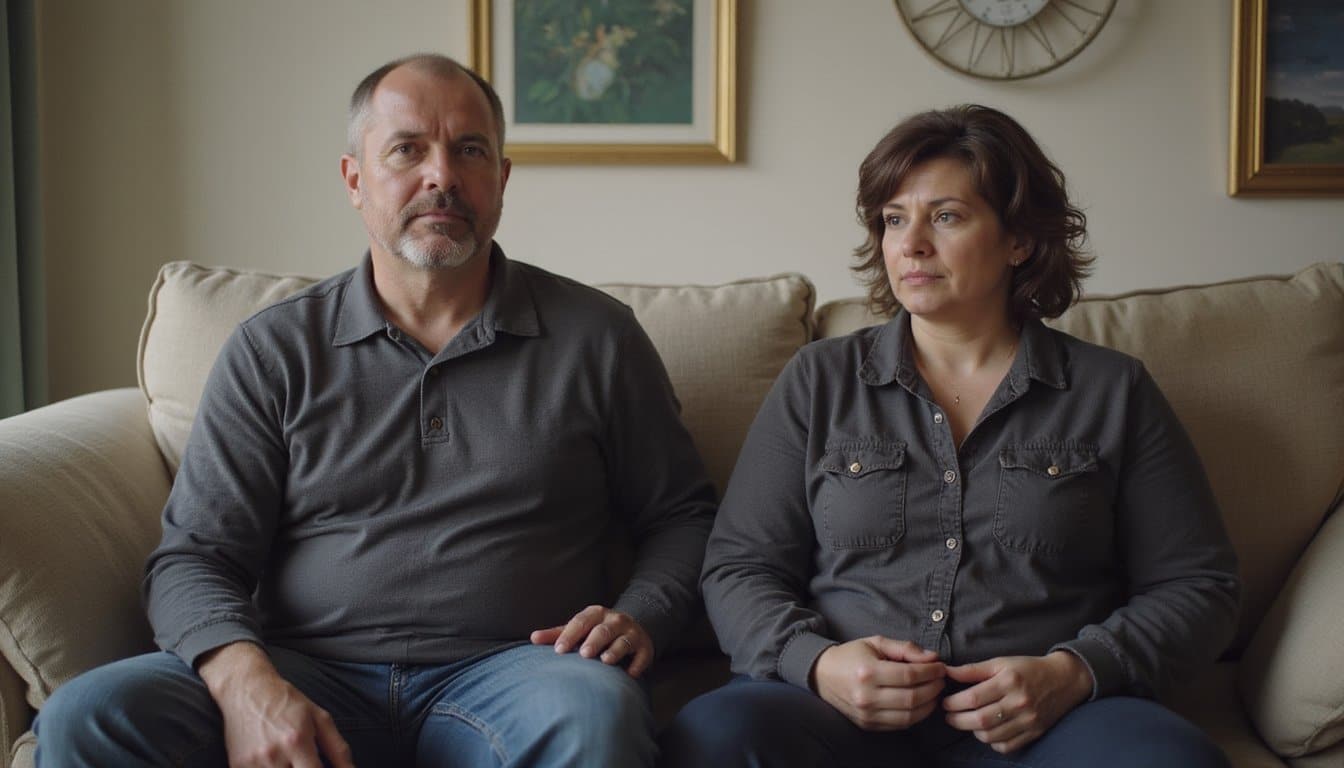
Family systems theory views your family as an interconnected emotional unit where everyone’s feelings, thoughts, and behaviors influence each other. When one person struggles, they’re often carrying stress that belongs to the entire system, not just themselves. This “identified patient” displays symptoms that reflect broader relational disruptions within the family. Understanding how your family functions as a single emotional organism reveals why lasting change requires looking beyond individual problems.
What Is Family Systems Theory?

When families face challenges, traditional perspectives often zero in on one person as the source of the problem. Family systems theory offers a different lens. Rather than isolating one individual, this approach views your family as an interconnected emotional unit where each member influences the others.
Developed from general systems theory, this framework examines family dynamics through relational patterns rather than individual symptoms. Dr. Murray Bowen developed this groundbreaking approach in the late 1950s, shifting the therapeutic focus from individual psychopathology to understanding the family as a whole. Your family operates as a bounded system with predictable cycles of interaction that shape how everyone responds to stress, conflict, and change. When stressors arise, your family naturally attempts to return to its original functional state, a process known as equilibrium.
Within these emotional systems, the whole becomes greater than its parts. Your family develops collective themes, roles, and identities that can’t be reduced to any single member’s behavior. Understanding this interconnection transforms how you approach lasting change.
Why Your Family Feels Everything as One Unit
This interconnection runs deeper than shared experiences or time spent together, your family operates as an emotional unit where members function as if living under the same “emotional skin.” The concept of emotional interdependence explains why one person’s stress, joy, or withdrawal ripples through everyone else.
Your family’s shared emotional environment means attention, approval, and support from relatives directly shape your thoughts, feelings, and behaviors. This emotional reactivity and connectedness isn’t a flaw, it’s how family systems naturally function. Therapists often use genograms to map these emotional patterns across multiple generations, revealing how interconnected family dynamics have developed over time.
When one member experiences change, others respond reciprocally. This process maintains family homeostasis, the system’s drive toward stability. Your family’s emotional climate operates as a regulatory environment, influencing baseline stress levels for everyone. The degree of connection varies between families, but this interdependence exists universally, binding members through invisible yet powerful emotional currents. Research demonstrates that emotional cutoff from family members, rather than providing relief, often leads to additional emotional and relational difficulties.
The “Identified Patient”: When One Person Carries the Family’s Stress

Although family members share emotional experiences as an interconnected unit, the system often channels its collective stress through a single person, the “identified patient.” In family therapy, this clinical term describes the member who becomes the symptom bearer, carrying and expressing the family’s authentic inner conflicts through visible behavioral or emotional struggles.
One person often carries the emotional weight of the entire family, becoming the visible expression of hidden collective pain.
This individual’s symptoms reflect broader disruptions in family functioning rather than isolated personal failure. Their struggles signal systemic behavior patterns requiring attention. By absorbing emotional tension, the identified patient serves as a lightning rod for family conflicts, providing temporary relief for other members from their own anxieties.
Common characteristics of the identified patient include:
- Presenting as the scapegoat, troublemaker, or “black sheep”
- Displaying addiction, self-harm, or oppositional behaviors linked to relational influence
- Experiencing intensified symptoms during periods of family stress
- Struggling with emotional regulation while absorbing unresolved family tension
Understanding this role shifts focus from blame toward recognizing interconnected family dynamics. The identified patient often functions as an emissary calling for help on the family’s behalf, prompting the system to seek therapeutic intervention.
Family Triangles: How Anxiety Jumps Between Members
When tension rises between two people in your family, a third person often gets pulled in to stabilize the relationship, this is called a triangle, and it’s the basic unit through which families manage anxiety. A two-person system is inherently unstable, as it tolerates little tension before drawing in a third person. You’ll notice anxiety doesn’t stay contained; it jumps between members, shifting who feels the most distress as alliances form and positions change. Research shows that adolescents frequently triangulated into hostile interparental conflict are at heightened risk for maladjustment, including internalizing, externalizing, and relational problems. Recognizing these triangle patterns is the first step toward disrupting them and creating healthier ways for your family to handle stress.
How Triangles Form
Triangles represent the smallest stable emotional unit in family systems, forming whenever anxiety between two people exceeds their capacity to manage it directly. When tension rises in a dyad, you’ll automatically pull in a third party, or substitute like work or substances, to restore equilibrium.
The family systems approach reveals predictable patterns in triangle formation:
- Rising anxiety in a two-person relationship creates unbearable pressure, triggering the search for relief
- A third member gets recruited, often someone more vulnerable within the family structure
- Behavioral cycles emerge as the original conflict remains unresolved while anxiety redistributes
- Family interaction patterns shift toward indirect communication, reinforcing triangulation as the default response
This process happens automatically, often outside your conscious awareness. Children raised in these environments frequently adopt specific roles like mediator or emotional caretaker, carrying responsibilities that don’t belong to them. To escape this dynamic, de-triangulation requires setting clear boundaries and creating distance from the original two-person relationship.
Anxiety Spreads Sideways
Once a triangle forms, anxiety doesn’t stay contained, it moves sideways through the family system. When tension overloads one relationship, it redistributes to another dyad, creating emotional feedback loops that perpetuate systemic stress. You’ll notice this when parental conflict shifts toward a child, temporarily reducing couple tension while burdening the child’s psychological adjustment.
| Anxiety Source | Where It Moves |
|---|---|
| Parental conflict | Parent-child relationship |
| Couple disconnection | Sibling or in-law tensions |
| Unresolved grief | Extended family dynamics |
This sideways movement reflects the family’s emotional field rather than individual dysfunction. Low cohesion, parental depression, and weak couple bonds amplify this lateral spread. Children caught between parents show higher internalizing symptoms, evidence that disrupted family communication and behavioral reinforcement patterns transfer anxiety across generations and relationships. The discomfort of being outside any triangle can drive family members to insert themselves into existing dyads, perpetuating the cycle of anxiety redistribution throughout the system. Understanding these patterns requires recognizing that triangling regulates emotional tension and serves as the family’s automatic mechanism for maintaining stability, even when that stability comes at a cost to individual members.
Breaking Triangle Patterns
Breaking free from triangulated patterns requires recognizing that these dynamics serve a function, they bind anxiety that feels too overwhelming for two people to manage directly. Through systemic thinking, you can identify how triangles maintain family equilibrium at someone’s expense, often a child pulled into adult conflicts. When emotional fusion remains unchecked, anxiety and emotional reactivity get transmitted unconsciously across generations, perpetuating these harmful patterns.
Strengthening family resilience involves deliberate shifts in how members relate:
- Develop differentiation, build your capacity to think clearly while staying emotionally connected, reducing reactive pull into others’ conflicts. This means cultivating emotional objectivity by separating facts from feelings even during intense family situations.
- Restore direct communication, encourage the original pair to address tension without routing it through a third person.
- Maintain generational boundaries, keep adult issues between adults, protecting children from mediator or confidant roles.
- Practice relational regulation, respond to emotions supportively rather than anxiously triangulating others.
These changes disrupt rigid patterns and promote lasting systemic health.
Hero, Scapegoat, Caretaker: Roles That Lock Problems in Place
Why do the same conflicts repeat across generations, even when family members genuinely want change? The answer often lies in relational roles that develop as part of the family stress response.
When dysfunction enters a system, members unconsciously adopt positions to manage systemic conflict. The hero maintains the family image through achievement and perfectionism, masking underlying problems. The scapegoat absorbs blame, acting out tensions others won’t acknowledge. These roles create relational stability by keeping anxiety predictable, even when that stability perpetuates pain. The mascot uses humor and distraction to deflect from underlying family tension.
You didn’t choose your role consciously. It emerged from your family’s need for equilibrium. Recognizing this pattern isn’t about assigning blame; it’s about understanding how interconnected behaviors lock problems in place and identifying where meaningful change can begin.
Rigid vs. Diffuse: How Family Boundaries Shape Dysfunction

When boundaries become too rigid, you lose access to the emotional support and connection your family could provide, leaving members isolated even when they’re struggling. When boundaries are too diffuse, distress spreads rapidly through the system, one person’s anxiety becomes everyone’s crisis, and individual needs get lost in the emotional blur. Both extremes prevent your family from functioning as a coordinated unit that can offer warmth while still respecting each member’s autonomy.
Rigid Boundaries Block Support
A locked door can protect privacy, but when every room in a house stays sealed, family members become strangers sharing the same address. Rigid emotional boundaries create walls that block family support structures from functioning. You might notice independence is valued, but emotional safety becomes sacrificed in the process.
When boundaries become inflexible, systemic balance shifts toward disconnection:
- Communication stalls as members live parallel lives rather than sharing problems
- Emotional needs go unmet because asking for help feels unwelcome
- Children struggle with anxiety and behavioral difficulties without accessible support
- Warmth and positive affect diminish, replaced by coldness and withdrawal
You’re not failing individually, you’re adapting to a system designed for separation. Recognizing these patterns opens pathways toward connection without losing healthy autonomy.
Diffuse Boundaries Spread Distress
Diffuse boundaries blur the lines between family members, creating emotional enmeshment where one person’s distress rapidly becomes everyone’s crisis. Within these interconnected relationships, chronic stress patterns amplify as negative emotions spill freely across subsystems. You’ll notice emotional disruption in one relationship quickly destabilizes others, making relational adaptation difficult to achieve.
| Characteristic | Impact on Family | Long-term Consequence |
|---|---|---|
| Over-involvement | Autonomy undermined | Dependency patterns |
| Emotional fusion | Distress amplification | Anxiety vulnerability |
| Role confusion | Boundary violations | Identity struggles |
| Intrusive behaviors | Privacy erosion | Differentiation failure |
| Spillover effects | Conflict escalation | Relational difficulties |
These patterns magnify environmental stressors, when instability runs high, children experience greater behavioral problems. You can’t regulate your own emotions when you’re constantly absorbing everyone else’s distress.
Why Families Resist Change Even When It Would Help
Even when a family genuinely wants things to improve, the system itself often works against change. Established behavioral norms create invisible resistance because familiar patterns feel safer than uncertainty, even painful ones. When one person begins healing, it disrupts family cohesion and triggers anxiety throughout the system.
You’ll often notice resistance intensifies precisely when progress occurs. This happens because system-wide change threatens established roles, power structures, and identity narratives everyone has relied upon.
Common reasons families resist beneficial change include:
- Fear of destabilization outweighs discomfort with current relational stressors
- Rigid roles (scapegoat, caretaker, hero) feel essential to family organization
- Emotional fusion makes any shift feel threatening to connection
- Cultural or historical patterns frame change as disloyal or dangerous
Understanding this resistance helps you approach transformation with realistic expectations.
How Family Patterns Pass From Generation to Generation
You don’t just inherit eye color or height from your family, you also inherit patterns of relating, coping, and managing stress that have shaped your family for generations. Through what’s called the multigenerational transmission process, emotional patterns, relationship styles, and even symptoms pass from parents to children through modeling, emotional programming, and everyday interactions. Understanding how these inherited coping styles operate gives you the awareness needed to interrupt cycles that no longer serve your family’s wellbeing.
Multigenerational Transmission Process
Patterns within families rarely emerge from a single generation. Multigenerational patterns develop through conscious teaching, unconscious modeling, and automatic emotional programming that shapes how you relate to others. Your capacity for intimacy, autonomy, and emotion regulation reflects learned behavior absorbed from caregivers who themselves inherited similar tendencies.
Family adaptation occurs through predictable mechanisms:
- Children attune to parental moods, internalizing anxiety and reactivity as personality traits
- Emotional dependency patterns transfer through daily interactions rather than deliberate instruction
- Mate selection reinforces existing differentiation levels, amplifying patterns across generations
- Family projection concentrates unresolved anxiety into specific children, creating underfunctioning roles
Research confirms that parental and child sex both influence how differentiation transmits. Without systemic awareness, you risk mislabeling inherited adaptations as fixed individual conditions rather than relational patterns requiring family-wide intervention.
Inherited Coping Styles
Coping styles don’t emerge from individual choice alone, they’re shaped by both genetic inheritance and learned family patterns that span multiple generations. Research shows coping style heritability ranges from 0.68, 0.76, meaning your stress response systems carry significant biological influence. Genetic variations in serotonin transport affect how you manage psychological patterns under pressure.
Beyond genetics, you learn coping through daily observation. When caregivers model avoidance or emotional suppression, these become your default responses.
| Influence Type | Transmission Method | Impact on Coping |
|---|---|---|
| Genetic | Inherited variations | Shapes baseline stress reactivity |
| Observational | Modeling behaviors | Establishes default responses |
| Trauma-based | Unresolved parental wounds | Creates survival-oriented patterns |
Understanding these coping systems reveals why systemic recovery requires addressing inherited patterns rather than individual behavior alone.
Breaking Generational Cycles
When families pass emotional patterns across generations, they transmit far more than conscious values or explicit rules, they transfer deep-seated anxiety, relationship blueprints, and levels of emotional differentiation that shape how each new generation handles stress and intimacy.
Breaking these cycles requires systemic awareness and intentional shifts in interpersonal dynamics. You can interrupt generational patterns through:
- Recognizing projection processes, identifying when you’ve absorbed a parent’s anxiety or been assigned a specific family role
- Increasing differentiation, developing the ability to remain connected without losing yourself in others’ emotions
- Replacing cutoff with connection, addressing unresolved family issues rather than avoiding them
- Reframing inherited behaviors, understanding them as adaptive responses rather than character flaws
Relational healing happens when you consciously choose different responses, creating new patterns for future generations.
What Happens in Family Systems Therapy
Family systems therapy begins with a structured assessment designed to clarify why the family is seeking help and what each member hopes to change. Your therapist uses genograms and mapping tools to trace multigenerational patterns, identifying how relational psychology shapes current struggles.
Once the assessment establishes a clear picture, you’ll work together to create a treatment contract specifying goals and session structure. The therapist builds trust with all members while setting ground rules around respect and emotional safety.
Sessions target maladaptive interaction cycles through reframing, communication training, and boundary restructuring. You’ll explore psychological systems that maintain dysfunction and work toward improved family alignment. The therapist helps you express unacknowledged emotions and examine inherited patterns. Progress monitoring guarantees interventions support lasting systemic health rather than temporary fixes.
How One Person’s Healing Can Shift the Whole Family System
While structured therapy sessions create a foundation for change, lasting transformation often begins when a single family member commits to their own healing, and that shift reverberates through the entire system.
When you develop greater differentiation of self, you’re less reactive and more grounded. This impacts everyone around you. Consider how individual healing creates systemic change:
- You stop carrying the emotional weight others have placed on you, forcing hidden conflicts to surface
- You establish healthier boundaries that disrupt codependent patterns and invite renegotiation
- Your non-reactive calm responses de-escalate chronic arguments and model effective communication
- Your reduced symptoms eliminate the family’s central organizing problem, prompting restructured roles
As you heal, family anxiety decreases. Children develop stronger coping skills. Relationships shift from reactive patterns to mutual, autonomy-respecting connections.
Frequently Asked Questions
Can Family Systems Theory Apply to Blended or Non-Traditional Family Structures?
Yes, family systems theory applies to blended and non-traditional families. You’ll find it’s especially useful because these structures involve multiple overlapping subsystems, stepparent-child relationships, coparenting across households, and new sibling dynamics. When you’re steering through loyalty binds or boundary renegotiation, systemic thinking helps you see how changes in one relationship ripple through the entire family. The theory’s flexibility lets you map your family’s unique structure rather than forcing a traditional template.
How Does Birth Order Influence Which Family Member Develops Symptoms?
Your birth order shapes the roles and expectations you inherit within the family system. Firstborns often carry achievement pressure, making them vulnerable to anxiety or perfectionism. Later-born children may develop externalizing symptoms like risk-taking as they carve out distinct identities. Middle children frequently absorb family tension through caretaking or rebellion. These patterns aren’t fixed, they’re adaptive responses to your family’s emotional dynamics and parental investment, influencing who becomes the symptom bearer.
Is Family Systems Therapy Effective When Some Family Members Refuse to Participate?
Yes, family systems therapy can still be effective when some members refuse to participate. You’ll often see meaningful progress when even one key person engages, since shifts in your behavior naturally ripple through the entire system. However, you should know that absent members may maintain patterns that limit lasting change. Your therapist can adapt strategies to work with whoever’s willing while remaining open to others joining later.
How Long Does Family Systems Therapy Typically Take to Show Results?
You’ll typically notice initial shifts within 6, 12 sessions, with most families achieving meaningful progress within 12, 20 sessions. Brief, focused approaches may produce results in as few as 8 sessions, while complex or long-standing patterns often require several months of consistent work. Your family’s engagement, the severity of challenges, and session frequency all influence pace. Remember, systemic change unfolds gradually as relational patterns shift, early improvements often deepen over continued treatment.
Can Workplace or Friend Groups Develop Similar Dysfunctional System Patterns?
Yes, workplaces and friend groups absolutely develop similar dysfunctional patterns. You’ll notice the same dynamics, triangulation, scapegoating, rigid roles, and conflict avoidance, emerge in any interconnected system. You might unconsciously replay family-of-origin roles at work, becoming the chronic caretaker or peacemaker. These groups maintain homeostasis just like families do, resisting change even when patterns cause harm. Recognizing these parallels helps you address relational dynamics wherever they appear.