








Yes, addiction systematically worsens your depression and anxiety through neurochemical disruption. While substances initially reduce symptoms, chronic use builds tolerance and rewires your brain’s dopamine and serotonin systems, intensifying anhedonic and anxious states. You’ll experience withdrawal-induced relapse cycles, compromised emotional regulation from gray matter loss, and dangerous self-medication patterns that double your odds of persistent mood disorders. Understanding these specific mechanisms reveals why integrated treatment approaches become essential for recovery.
The Vicious Cycle: How Substance Use Temporarily Masks but Ultimately Worsens Depression and Anxiety

While substances like alcohol and drugs may initially reduce feelings of anxiety or depression, this apparent relief creates a dangerous illusion that masks the underlying pathology. You’re fundamentally self-medicating distress through temporary numbing, which misconstrues symptom suppression as genuine improvement. However, regular use builds physical tolerance, requiring progressively larger amounts to achieve the same mood-altering effects. This escalation increases your risk of dependence while negative side effects intensify.
Long-term substance use disrupts your central nervous system, exacerbating depressive and anxious states through neuroadaptation. Alcohol and depressants decrease serotonin levels, worsening mood regulation. You’ll experience rebound anxiety and depression that’s more intense than baseline symptoms, creating mood destabilization. This pattern establishes chronic relapse cycles as withdrawal symptoms prompt continued use to avoid psychological distress. The signs of addiction in high-functioning adults are particularly easy to miss because they maintain their ability to hold jobs and manage daily responsibilities despite their deteriorating mental health. Research shows that 20% of individuals diagnosed with an anxiety disorder also have a substance use disorder, highlighting the significant overlap between these conditions.
Neurochemical Disruption: Long-Term Brain Changes That Fuel Mental Health Deterioration
Chronic substance use fundamentally rewires your brain’s neurochemical architecture, creating persistent alterations that extend far beyond temporary intoxication effects. Your dopamine systems undergo significant downregulation, reducing your capacity for experiencing pleasure and motivation while intensifying anhedonic symptoms. Concurrent serotonin dysregulation perpetuates mood instability and heightened anxiety states. The extended amygdala becomes hypersensitized, amplifying your stress reactivity and withdrawal-related distress.
Structural imaging reveals gray matter loss in critical regions, prefrontal cortex, dorsal striatum, and the insula, directly compromising your emotional regulation capabilities. These neuroanatomical changes mirror those observed in primary mood disorders, indicating shared pathophysiological mechanisms. Your executive function deteriorates as prefrontal dysfunction impairs cognitive control restoration, while disrupted glutamate signaling compounds both cognitive deficits and stress regulation difficulties. The compromised reward system becomes unable to respond adequately to natural rewards, making everyday pleasurable activities feel unsatisfying and reinforcing the cycle of substance dependence. This disruption stems from drugs interfering with how neurons send and receive chemical signals throughout your brain’s communication network. Physical exercise may help counteract these neurological impairments by promoting improved neuroplasticity during recovery. Achieving neurotransmitter recovery requires extended abstinence periods, as these neuroadaptive changes persist long after cessation.
Self-Medication Trap: Why Using Substances to Cope Increases Suicide Risk and Psychiatric Symptoms
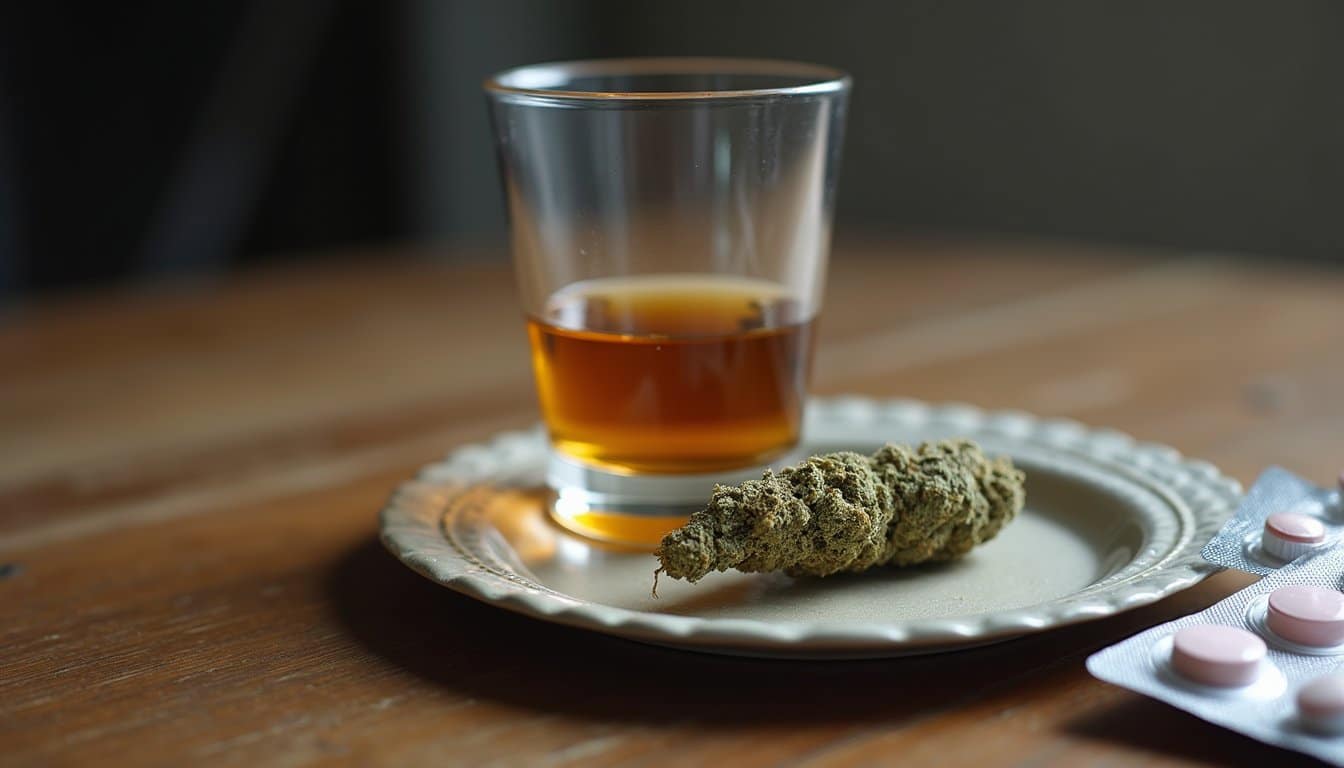
Beyond these fundamental neurobiological changes, many individuals attempt to counteract emerging psychiatric symptoms through self-medication, a strategy that paradoxically accelerates mental health deterioration.
Self-medication creates a destructive cycle where attempts to alleviate psychiatric symptoms ultimately worsen the underlying mental health crisis.
When you self-medicate with substances, you’re creating dangerous medication interactions that can amplify existing psychiatric symptoms rather than alleviating them. Research demonstrates an adjusted odds ratio of 7.65 for developing new-onset drug dependence among mood disorder patients who engage in self-medication behaviors. Self-medication behaviors also significantly increase the likelihood of disorder persistence, with studies showing doubled odds of continued drug abuse over three-year follow-up periods.
This maladaptive coping mechanism creates four critical risks:
- Heightened self harm tendencies due to increased impulsivity and impaired judgment during intoxication
- Worsening mood instability with over 25% of new drug dependence cases attributable to self-medication
- Treatment-resistant symptom patterns requiring complex integrated interventions
- Delayed professional intervention with 30% never seeking medical care for underlying conditions
Studies examining individuals with mental health symptoms reveal that those with unmet mental health needs are more likely to use illicit drugs other than marijuana, demonstrating how inadequate professional treatment drives problematic substance use patterns. Alarmingly, 78% of people who experienced health issues had self-medicated in response, highlighting the widespread nature of this dangerous coping mechanism.
Beyond Depression and Anxiety: How Addiction Triggers Psychosis, Panic Attacks, and Sleep Disorders
Most individuals recognize addiction’s connection to depression and anxiety, yet substance use triggers a broader spectrum of severe psychiatric conditions that extend far beyond mood disorders. You’re at considerably heightened risk for substance induced psychosis, with odds ratios ranging from 1.54 to 1.68 for psychotic symptoms, including delusions and hallucinations. Your panic attack susceptibility increases dramatically through physiological hyperarousal and emotional instability, particularly with stimulants and alcohol withdrawal. Sleep disorders represent another critical pathway; hazardous alcohol use raises poor sleep quality odds by 80%, while benzodiazepine misuse doubles insomnia risk. These substance-induced sleep disturbances create etiological pathways for persistent psychotic episodes, with global data showing that severe sleep problems increase psychotic symptom odds by 2.41 times across 56 countries. Clinical screening reveals frequent comorbidity patterns where alcohol, cannabis, benzodiazepines, and amphetamines consistently correlate with multiple psychiatric disorder presentations, complicating diagnosis and treatment outcomes. Current smoking demonstrates significant associations with shortened sleep duration, increasing the odds by 28% in patients already struggling with schizophrenia, bipolar disorder, and other psychotic conditions.
Adolescent Vulnerability: The Devastating Impact of Early Substance Exposure on Developing Minds

When you expose developing adolescent brains to substances, you’re disrupting critical neurodevelopmental processes that won’t complete until the mid-twenties. Your prefrontal cortex, responsible for impulse control and decision-making, becomes particularly vulnerable to substance-induced damage during these formative years. This disruption doesn’t just affect immediate cognitive function; it establishes neurobiological vulnerabilities that substantially/considerably increase your risk for psychiatric disorders throughout adulthood. Research shows that heavy drinking during adolescence causes measurable deficits in memory, attention, and executive functioning that persist even after weeks of abstinence. Statistics reveal that adolescents who begin drinking at ages 11-12 have a 7.2% likelihood of developing an alcohol use disorder within just two years. The brain’s reward system becomes fundamentally altered as drugs overload dopamine pathways, forcing the brain to reduce its natural pleasure signals and creating a cycle where increasingly larger amounts are needed to achieve the same effects.
Brain Development Disruption
The structural damage manifests through:
- Reduced brain volume in the hippocampus and prefrontal cortex regions
- Compromised white matter integrity, disrupting inter-regional connectivity
- Impaired myelination processes, hindering neural network maturation
- Persistent activation abnormalities during cognitive tasks, even after prolonged abstinence
Animal studies demonstrate that adolescent brains sustain extensive greater damage than adult brains following identical substance exposure, particularly affecting decision-making and working memory circuitry. Adolescent substance exposure also triggers neuroinflammation that disrupts normal synaptic plasticity and can lead to neuronal cell death. These alterations represent permanent architectural changes rather than temporary impairments.
Smoking behaviors specifically impact the development and function of attentional brain circuits, including the prefrontal cortex, inferior parietal cortex, and anterior insula.
Long-term Psychiatric Risk
Beyond structural brain damage, adolescent substance exposure creates a cascade of psychiatric vulnerabilities that persist well into adulthood. When you’re exposed to substances during adolescence, you’re at considerably higher risk for developing dual diagnoses, with 37, 80% of adolescents with SUDs presenting at least one co-occurring mental health disorder. This long-term psychiatric progression accelerates rapidly; two-thirds of adolescents developing substance use disorders have already experienced psychiatric conditions.
You’ll face diminished psychosocial functioning, compromised family relationships, and poorer educational outcomes. Early-onset SUDs with psychiatric comorbidities predict lower recovery likelihood and higher chronicity of both disorders. Your risk for suicide ideation increases substantially, with 20% of high school students seriously considering suicide annually. Co-occurring conditions complicate treatment protocols and worsen long-term prognosis extensively.
Statistical Reality: Understanding the Prevalence of Co-Occurring Addiction and Mental Health Disorders
If you’re questioning whether addiction truly worsens mental health conditions, the statistical evidence provides unambiguous confirmation of this relationship. Dual diagnosis prevalence rates reveal that 33.5% of U.S. adults with substance use disorders simultaneously experience mental illness, with comorbidity rates reaching 88% in specific conditions like ADHD-related behavioral addictions. These treatment population data demonstrate that co-occurring disorders don’t simply coexist; they create compounding clinical presentations that profoundly amplify functional impairment and worsen prognosis across all demographic groups.
Dual Diagnosis Prevalence Rates
Statistical evidence reveals a stark reality: dual diagnosis affects millions of Americans, with approximately 8% of the adult population, roughly 17.5 million individuals experiencing serious mental illness annually, and nearly 4 million of these also battling substance use disorders.
These prevalence rates demonstrate significant treatment barriers and socioeconomic factors:
- One in four individuals with serious mental illness simultaneously struggles with substance use disorders
- 25.8% of all psychiatric disorder cases involve dual diagnosis complications
- 36.5% of substance use disorder cases present with co-occurring mental health conditions
- 40% increase occurred from 2014-2019, adding over one million Americans to dual diagnosis statistics
The demographic concentration among 18-25 year-olds (38% of cases) indicates early-onset patterns requiring immediate intervention strategies to prevent long-term complications.
Youth Mental Health Statistics
Adolescence represents a critical developmental window where mental health disorders and substance use frequently intersect, creating complex clinical presentations that demand immediate attention. You’re confronting alarming statistics: 40% of high school students report persistent hopelessness, while 20% experience anxiety symptoms within two-week periods. The co-occurrence escalates risk extensively; use among teens correlates directly with increased emotional distress and mental health complications. You’ll find that 23% of youth ages 12-17 experience major depressive episodes or substance use disorders simultaneously. Despite 55% discussing mental health with professionals, 20% face unmet care needs. Effective mental health solutions require all-encompassing dual-diagnosis treatment approaches. Stigma reduction remains essential, particularly given that consequences extend into adulthood, affecting lifelong well-being and functional capacity.
Treatment Population Data
- 33.5% of adults with mental illness develop concurrent substance use disorders annually
- 51.9% of individuals with serious mental illness used illicit drugs within the past year
- 20.3 million adults with substance use disorders carry comorbid mental health diagnoses
- 84.5 million U.S. adults (32.8%) experience either condition or both simultaneously
Despite this prevalence, most individuals don’t receive integrated care addressing both conditions. Current service integration remains inadequate, creating treatment gaps that perpetuate chronic illness trajectories and heightened mortality rates across affected populations.
High-Risk Combinations: When ADHD, Bipolar Disorder, and Personality Disorders Meet Substance Abuse
When certain psychiatric conditions converge with substance abuse, they create dangerous amplification cycles that dramatically worsen clinical outcomes. If you’re dealing with ADHD, bipolar disorder, or personality disorders alongside addiction, you’re facing heightened comorbidity consequences that extend far beyond individual diagnoses.
With ADHD-substance use combinations, you’ll experience nearly twice the risk for alcohol or cocaine disorders and triple the nicotine addiction likelihood. Bipolar disorder elevates your SUD risk to 60% lifetime prevalence, triggering earlier onset and treatment-resistant presentations. Borderline personality disorder creates the most severe vulnerability, with 78% developing substance disorders.
These high-risk combinations generate symptom exacerbation dynamics, amplifying impulsivity, mood instability, and self-harm behaviors. You’ll face increased hospitalization risks, treatment nonadherence, and cyclic psychiatric deterioration that compounds both conditions simultaneously.
Breaking the Pattern: Overcoming Treatment Challenges for Dual Diagnosis Recovery
Breaking free from dual diagnosis cycles requires traversing a treatment landscape where only 18% of addiction programs and 9% of mental health facilities offer dual diagnosis capability. This fragmented system leaves you with suboptimal outcomes when conditions aren’t addressed simultaneously.
Fragmented treatment systems create barriers when only a fraction of programs address both addiction and mental health conditions simultaneously.
Cross-system coordination through integrated care models demonstrates superior clinical effectiveness by addressing both substance use and psychiatric disorders concurrently. Multidisciplinary collaboration produces higher attendance rates and reduced dropout frequencies compared to traditional approaches.
Essential strategies for overcoming treatment barriers include:
- Comprehensive assessment identifying both conditions through systematic screening protocols
- Integrated treatment planning combining addiction and psychiatric interventions simultaneously
- Provider training enhancement expanding dual diagnosis capable programs nationwide
- Ongoing monitoring systems ensuring continuous care coordination across disciplines
With less than 1% of programs offering dual diagnosis enhanced services, advocating for integrated approaches becomes vital for your recovery success.
Frequently Asked Questions
Can Someone Develop an Addiction Even When Using Substances Prescribed by a Doctor?
Yes, you can develop prescribed substance dependency even when following doctor-recommended use risks. Taking opioids longer than three months increases your addiction risk fifteen-fold, with 0.8% of adolescents meeting dependence criteria from prescribed medications. You’re at heightened risk if you’re over fifteen, have mental health conditions, or use other substances concurrently. Most acute pain requires only seven days’ supply, yet prescription misuse affects 8.2% of adolescents annually.
How Long Does It Take for Mental Health to Improve After Stopping Substance Use?
Your recovery timeline varies considerably based on substance type and individual factors. You’ll experience post cessation symptoms most intensely during acute withdrawal (1-2 weeks), but meaningful mental health improvements begin within 0-6 months. Substantial mood stabilization typically occurs between 6-12 months as neurotransmitter systems rebalance. You’ll likely see continued anxiety and depression reduction over 1-2 years, with ideal cognitive and emotional recovery potentially requiring over two years of sustained abstinence.
Are Certain Genetic Factors That Make Some People More Vulnerable to Dual Diagnosis?
Yes, you’re genetically predisposed to dual diagnosis through specific variants. Genetic predisposition accounts for 40-60% of your risk, with dopamine system genes and OPRM1 variants creating shared vulnerability pathways. You’ll find identical twins show higher concordance rates than fraternal twins. However, environmental factors markedly modulate expression, stress, trauma, and substance exposure interact with your genetic architecture to determine actual manifestation and severity of comorbid conditions.
What Role Does Family History Play in Developing Both Addiction and Mental Illness?
Your family history creates significant familial risk factors through both genetic predisposition and environmental transmission patterns. You’ll face dose-dependent risk increases with more affected relatives, experiencing earlier onset and greater clinical severity of co-occurring disorders. Your genetic vulnerability manifests through substance-specific concordance with siblings and inherited neurocognitive deficits affecting decision-making and behavioral control. These hereditable factors amplify your susceptibility to developing comorbid addiction and psychiatric conditions beyond individual environmental influences alone.
Can Moderate or Occasional Substance Use Still Worsen Existing Mental Health Conditions?
Yes, moderate substance use markedly worsens your existing mental health conditions. Even occasional use amplifies depressive and anxiety symptoms by disrupting neurotransmitter systems, creating greater emotional instability after temporary relief dissipates. Your self-medicating tendencies actually deepen baseline distress rather than providing genuine relief. Research demonstrates that comorbid conditions worsen with any level of substance use, as even limited consumption impairs your emotional regulation and stress-coping mechanisms long-term.