







Your baby’s attachment style forms through thousands of daily interactions during the first year of life. When you respond consistently and warmly to your infant’s needs, you’re building the foundation for secure attachment. Your baby learns whether emotions are safe and whether caregivers can be trusted based on your responses to their distress signals. These early patterns create mental blueprints that influence relationships throughout life, and understanding each attachment style can help you recognize the signs.
What Is Attachment and Why the First Year Matters Most?
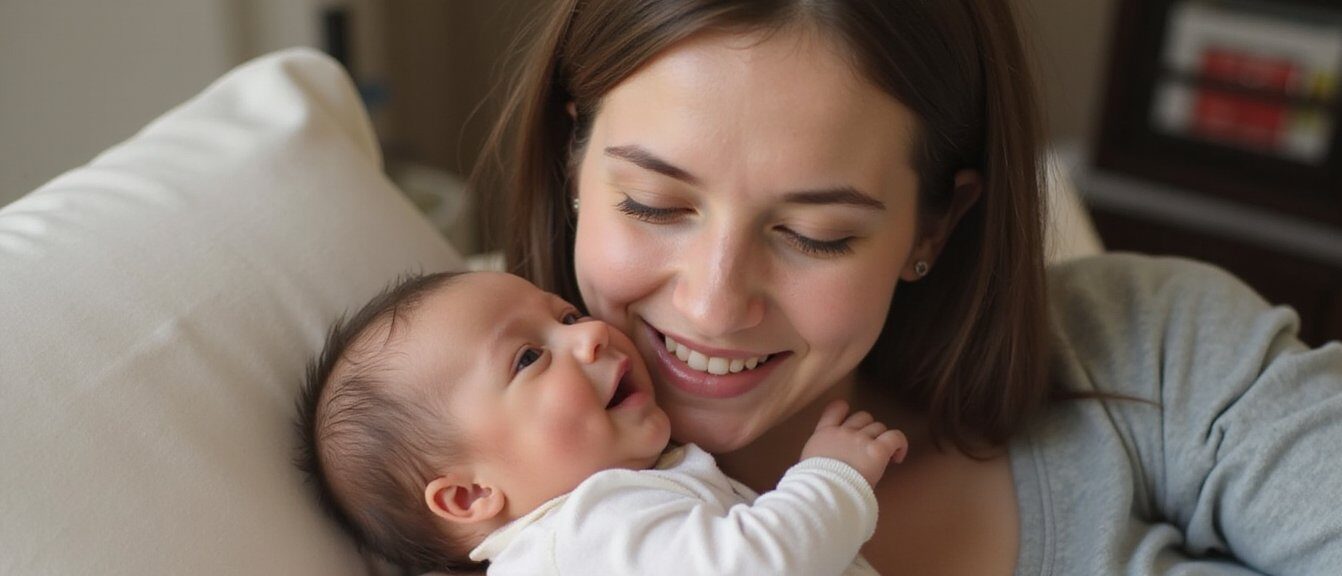
Attachment forms through the emotional bond between an infant and their primary caregiver during the earliest months of life. This caregiver bonding and attachment process shapes how babies form attachment patterns that influence relationships throughout adulthood. Your infant’s brain is neurologically primed for social connection from birth, making responsive parenting and secure attachment development critical during this period.
Around four months, your baby begins developing an internal working model, a mental template for how childhood experiences shape relationships. Through co-regulation in infants and parent-child emotional connection, you’re teaching your child whether emotions are safe and whether caregivers provide a secure base. This early nervous system development establishes patterns for emotional regulation development, trust development, and self-soothing skills that persist into adulthood. When caregivers consistently engage in “serve-and-return” interactions, responding to baby’s cues with appropriate feedback, they strengthen the neurobiological foundation for secure attachment. Research shows that sensitive parental responsiveness is causally linked to attachment security, with randomized intervention studies confirming that enhancing a parent’s ability to perceive, interpret, and respond to their child’s signals directly improves attachment outcomes. Harry Harlow’s classic research with rhesus monkeys demonstrated that infants have an innate need for contact comfort, showing that the warmth and softness of a caregiver matters beyond simple feeding.
How Babies Form Their First Attachment Bonds
Before your baby takes their first breath, the foundation for attachment has already begun forming. During pregnancy, your fetus develops preferences for your voice and scent, responding to your emotional states around the 26th week. Neural pathways for socio-emotional connection start building in the womb.
At birth, high norepinephrine levels prime your infant’s brain for bonding. Oxytocin drives both your nurturing behaviors and your baby’s proximity-seeking instincts. Key brain structures, the amygdala, prefrontal cortex, and hippocampus, stand ready for emotional programming. Your presence regulates your infant’s physiology, including stress responses and heart rate, which is critical for healthy emotional development.
Bowlby identified four developmental phases. Initially, newborns respond to everyone equally. By 8-12 weeks, they recognize you but don’t show preference. Later, they’ll use you as a secure base, experiencing distress when separated. Finally, they develop goal-directed partnership behaviors, actively maintaining connection with you. These early attachment experiences will shape their social and romantic relationships throughout their entire lifetime. Research shows that responsive and consistent caregiving during these phases leads to secure attachment patterns.
How Your Responses Shape Your Baby’s Attachment Style

From around six months of age, your baby begins anticipating how you’ll respond to their distress, and these predictions shape their developing attachment style. When you consistently meet their needs with warmth and sensitivity, you’re building the foundation for secure attachment. Your baby learns that expressing emotions is safe and that comfort reliably follows distress.
However, rejecting responses, ignoring cries, showing annoyance, or ridiculing emotional expressions, push infants toward avoidant attachment patterns. These babies learn to minimize negative emotions and suppress proximity-seeking behaviors as adaptive strategies.
Consistency matters enormously. Unpredictable parenting, where responses fluctuate between nurturing and dismissive, undermines attachment security. This inconsistent caregiving pattern specifically leads to insecure-resistant attachment, where children become anxious and uncertain about their caregiver’s availability. Physical punishment further correlates with insecure attachment development. Your baby isn’t simply reacting to individual moments, they’re constructing internal working models based on patterns, predicting whether you’ll be available when they need you most. Research shows that children who develop secure attachment demonstrate greater confidence and healthier peer relationships as they grow. This sense of security provided by the attachment figure can last throughout the child’s life.
Signs of Secure Attachment in Babies and Toddlers
When your baby feels secure, you’ll notice two key behaviors working together: they seek you out for comfort when distressed, and they explore their environment confidently when you’re nearby. This pattern reflects what attachment researchers call the “secure base” phenomenon, your child uses your presence as a launching point for discovery while checking back periodically to verify you’re still available. These behaviors indicate that your consistent responses have taught your baby that support is reliable and the world is safe to investigate. Research confirms that sensitive and responsive caregiving, which includes noticing, interpreting, and promptly responding to your infant’s signals, builds this foundation of security. As they grow, securely attached children typically develop strong social skills and demonstrate empathy toward others.
Comfort-Seeking From Caregivers
Because secure attachment develops through repeated experiences of responsive caregiving, babies and toddlers display distinct comfort-seeking behaviors that signal healthy emotional bonds. When you observe your infant approaching you for soothing cuddles after a separation, you’re witnessing attachment security in action. Your baby uses specific cues, eye contact, cries, and reaching gestures, to communicate their need for proximity, trusting you’ll respond.
Securely attached children actively prefer your company and seek your support during uncertainty. You’ll notice your toddler briefly clinging for reassurance when facing unfamiliar situations, then confidently returning to exploration once settled. This pattern demonstrates their internalized trust in your protection and availability. When you provide this safe haven through soothing responses, you help your child develop internalized self-soothing strategies that serve them throughout life. These early experiences also lay the foundation for children to openly express and regulate a wide range of emotions as they grow into middle childhood.
Research shows these children return quickly to their caregiver or display distress when separated, reflecting their expectation that comfort remains accessible and reliable.
Exploration With Safe Base
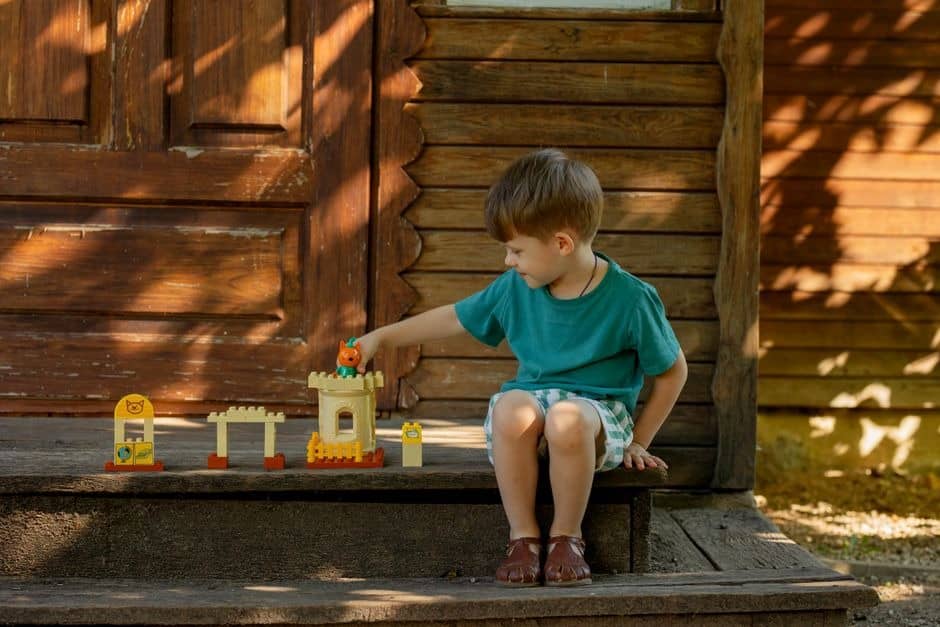
Secure attachment reveals itself most clearly through a child’s willingness to explore while using you as a reliable anchor. You’ll notice your baby ventures toward toys and novel objects, periodically glancing back to confirm your presence. This visual checking replaces full retreats, your child signals connection without abandoning exploration. Toddlers demonstrate this pattern by briefly touching base with you before resuming independent activity.
Research shows securely attached infants cover greater distances during observation studies and engage longer with unfamiliar objects when you’re present. Their stress response systems remain calibrated, with normalized cortisol levels supporting sustained curiosity. Neurologically, consistent caregiving strengthens amygdala-prefrontal cortex connections, enabling better emotional regulation during exploration. These children interpret mild novelties as manageable challenges rather than threats, resuming play quickly after brief disruptions. Mary Ainsworth’s Strange Situation experiments first identified these exploration patterns, revealing how securely attached children confidently investigate their environment while maintaining connection with caregivers. Studies also demonstrate that maternal touch buffers infant cortisol responses to stress, helping maintain the physiological calm that supports confident exploration. Parents who possess secure base script knowledge tend to respond with greater flexibility and sensitivity, reinforcing their child’s confidence to explore independently while knowing comfort is available when needed.
What Happens When Babies Don’t Get Consistent Responses?

When your responses to a baby’s needs are inconsistent, unpredictable, or rejecting, the infant adapts in ways that shape their attachment style. You might see avoidant patterns emerge when caregivers repeatedly dismiss or reject bids for comfort, leading babies to suppress their distress even while remaining physiologically activated. Inconsistent responding, sometimes attentive, sometimes intrusive or unavailable, can produce anxious-ambivalent attachment marked by clinginess and difficulty being soothed, while frightening or extremely neglectful caregiving creates disorganized attachment patterns where the child views you as both a source of comfort and threat.
Avoidant Attachment Develops
Avoidant attachment typically develops in infants whose caregivers consistently fail to respond to their emotional needs with warmth and sensitivity. When you experience neglect or rejection during critical developmental periods, your brain adapts by suppressing security-seeking behavior. You learn to avoid actively engaging with caregivers for comfort because past attempts haven’t yielded reliable support.
Research shows this pattern creates measurable neurological changes. Your developing brain forms pathways that normalize emotional distance as a coping mechanism. You display little emotion when caregivers leave or return, having internalized that emotional expression doesn’t result in connection.
These early adaptations serve a protective function, you’re conserving energy by not seeking comfort that won’t come. However, this learned suppression extends beyond infancy, affecting your capacity for peer relationships and emotional expression throughout development.
Anxiety and Clinginess Emerge
Unlike avoidant attachment, which develops from consistent emotional neglect, anxious attachment emerges when caregivers respond unpredictably, sometimes attentive and intrusive, other times dismissive or unavailable. You learn that your signals sometimes work and sometimes don’t, creating uncertainty about whether comfort will come.
In the Strange Situation, you’d see anxiously attached infants become highly distressed when caregivers leave and remain tense even after reunion. These babies signal desperately for closeness but can’t achieve enough contact to calm down. They resist communication efforts while simultaneously seeking proximity, a contradictory pattern reflecting their inconsistent experiences.
Research links this attachment pattern to later anxiety disorders, with anxious attachment showing stronger correlations with anxiety than other insecure styles. You develop less basic trust and ego resiliency, struggling to recover from setbacks throughout childhood and beyond.
Disorganized Patterns Form
You’ll observe distinctive behaviors in disorganized infants:
- Contradictory sequences where strong attachment-seeking suddenly shifts to avoidance or freezing
- Simultaneous opposing behaviors like reaching toward a caregiver while turning away
- Anomalous movements including stereotyped, asymmetrical, or interrupted expressions of need
Unresolved parental trauma greatly predicts this pattern, with research showing parental lapses during trauma discussions correlate with infant disorganization. Between ages three and six, these children typically develop controlling strategies to manage the instability their caregivers couldn’t provide.
Avoidant, Anxious, and Disorganized Attachment Compared
When examining the three primary insecure attachment patterns, distinct behavioral and emotional signatures emerge that trace directly back to specific caregiving environments.
If you developed avoidant attachment, you prioritize independence and struggle with emotional intimacy. You’re reserved, self-reliant, and may feel suffocated when partners seek closeness. Your satisfaction suffers because deeper bonds feel threatening.
With anxious attachment, you crave constant reassurance while fearing abandonment. You’re emotionally expressive but hypersensitive to rejection signals, often perceiving yourself as unworthy of love despite desperately pursuing connection.
Disorganized attachment creates the most complex presentation. You simultaneously fear and seek intimacy, displaying contradictory push-pull behaviors that confuse partners. You alternate between avoidance and clinginess, struggle to regulate emotions, and may have difficulty articulating traumatic childhood experiences. This pattern affects 20-40% of the general population.
How Early Attachment Shapes Your Child’s Future Relationships
The attachment patterns your child develops in their earliest years create internal working models, mental blueprints that guide their expectations about relationships throughout life. These models shape how your child selects romantic partners, communicates needs, and handles emotional intimacy as an adult.
Early attachment creates mental blueprints that shape how your child will navigate love and intimacy for a lifetime.
Research demonstrates secure attachment correlates positively with relationship satisfaction (r=0.262, p<0.05), while anxious attachment shows negative correlation (r=-0.229, p<0.05). Children with secure foundations typically choose supportive partners and maintain healthier interdependence.
- Secure models foster trust, open communication, and selection of emotionally available partners who mirror early positive experiences
- Insecure models often drive attraction toward unavailable or unkind partners, recreating familiar childhood dynamics
- Developmental pathways extend across generations, though new relationship experiences can update these mental blueprints over time
Can Parents Repair an Insecure Attachment Pattern?
Recognizing your own attachment patterns marks the critical first step toward breaking cycles of insecurity with your child. Research shows insecure attachment remains changeable when you develop awareness of how your early experiences shape your caregiving responses. Parents with insecure styles often misinterpret their child’s behaviors as threats due to impaired reflective functioning.
You can interrupt intergenerational transmission by building your capacity to reflect on both your inner experiences and your child’s emotional states. Evidence-based interventions like attachment-based family therapy, dyadic video feedback, and parent-child interaction therapy effectively rebuild trust and eliminate negative parenting patterns. Studies demonstrate foster care interventions increase secure attachment patterns extensively (P < .04), while 64.3% of infants show healthy development post-intervention. Consistent sensitivity and enhanced emotional regulation create corrective experiences that shift attachment toward security.
When to Seek Professional Help for Attachment Concerns
Many parents wonder whether their child’s attachment behaviors fall within typical developmental range or signal something requiring clinical attention. You should consider professional evaluation when your child consistently avoids seeking comfort during distress, shows persistent emotional dysregulation, or demonstrates inability to form trusting relationships despite stable caregiving conditions.
Consider professional evaluation when your child consistently avoids comfort during distress or cannot form trusting relationships despite stable caregiving.
Trained attachment specialists can conduct thorough assessments to distinguish temporary developmental challenges from patterns requiring intervention. Evidence-based approaches include child-parent psychotherapy for young children and attachment-based family therapy for repairing caregiver-child ruptures.
Seek immediate professional support when you observe:
- Persistent mood symptoms, anxiety, or trauma-related behaviors that don’t resolve
- Social, emotional, or behavioral challenges affecting daily functioning
- Any suicidal ideation or severe emotional distress
Early intervention prevents long-term relational difficulties and supports healthy developmental trajectories.
Frequently Asked Questions
Can a Child Form Secure Attachments With Multiple Caregivers at Once?
Yes, you can form secure attachments with multiple caregivers simultaneously. Research shows that by the end of your first year, you’ll typically develop attachments with several caretakers who provide consistent, responsive care. When you’re securely attached to one parent, you’re more likely to form secure bonds with others. Having multiple secure attachments serves as a protective factor, if one relationship is inconsistent, another secure bond can buffer negative effects on your development.
Do Attachment Styles Stay the Same From Childhood Into Adulthood?
Attachment styles show moderate stability from childhood into adulthood, but they’re not fixed. Research supports a prototype model where your early patterns persist as defaults while remaining open to revision. If you experienced secure attachment as a child, you’ll likely maintain that security, unless significant instability disrupts your environment. Conversely, if you developed insecure patterns, later supportive relationships and stable circumstances can shift you toward security over time.
How Does Poverty or Domestic Abuse Affect a Child’s Attachment Development?
Poverty and domestic abuse profoundly disrupt your attachment development by elevating chronic stress hormones that impair brain regions governing emotion regulation. When you’re raised in poverty, your caregiver’s mental health often suffers, reducing their responsiveness and attentiveness, key ingredients for secure attachment. Domestic abuse creates unpredictable, threatening environments where you can’t rely on caregivers for safety. These compounding stressors increase your risk for insecure attachment patterns and long-term socioemotional difficulties.
At What Age Can Children Start Forming Friendships Based on Attachment?
You can see attachment-based bonds forming as early as 6 weeks with consistent caregivers like siblings or grandparents. By ages 3-4, you’ll notice children engaging in traditional friendships involving peer selection and play. Selman’s theory identifies Stage 1 friendships (ages 3-7) as viewing peers as momentary playmates. By ages 5-7, children develop best friend attachments, typically with same-sex peers, building skills in loyalty and trust that prepare them for adult relationships.
Can Teachers or Other Adults Help Children Who Lack Secure Parental Bonds?
Yes, teachers and other adults can meaningfully support children who lack secure parental bonds. When you provide consistent, responsive interactions, you help modify a child’s internal working models of relationships. Research shows you’re most effective when you focus on sensitive responding and maintain stable, long-term involvement. Through attuned caregiving, you can help children develop emotional regulation and trust, though these supplementary bonds work best alongside, not replacing, primary attachment relationships.