





Why Do Family Patterns Pass From Parents to Children?
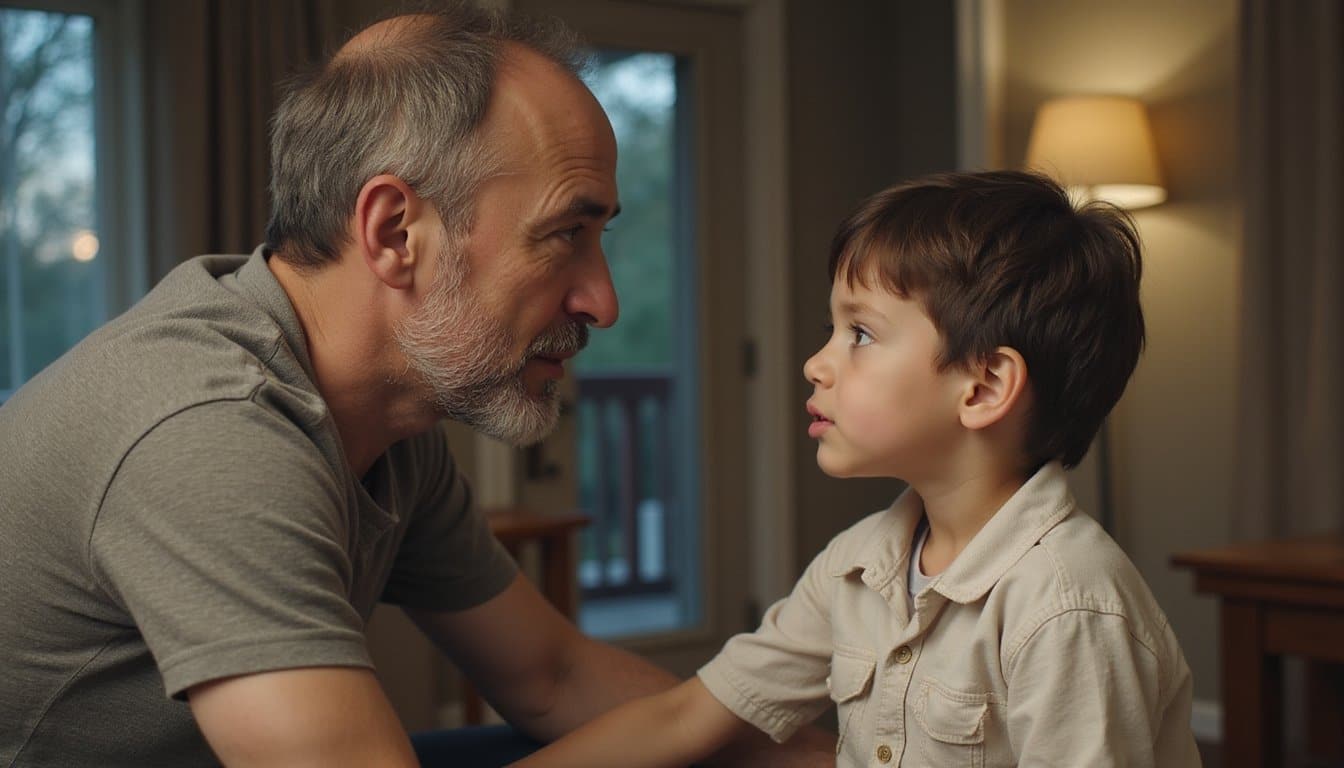
When you watch your own reactions during a family disagreement, you might notice responses that feel automatic, patterns you didn’t consciously choose but somehow inherited. These learned family behaviors develop through observation and repetition during childhood. You absorbed your parents’ conflict styles, emotional responses, and ways of seeking closeness or distance. Research shows that closeness transmits more strongly between mothers and daughters than between mothers and sons.
Your attachment experiences shaped your emotional regulation systems, creating templates for how you manage stress in relationships. Family cycles persist because they offer relational predictability, even painful patterns reduce uncertainty. Family homeostasis pulls members back toward familiar dynamics when someone attempts change.
Multigenerational patterns accumulate through small shifts in emotional differentiation across generations. Each family transmits its relational blueprints, and you carry forward what you witnessed, often without awareness. However, research demonstrates that offspring who develop high coherence about their parents’ relationship can better translate witnessing parental conflict resolution into increased optimism about their own future marriages.
The Economic Forces That Lock Family Patterns in Place
Your family’s economic position doesn’t just affect your bank account, it shapes the stability of your relationships and the paths available to your children. When income drops or jobs disappear, couples face mounting pressure that strains even strong partnerships, while those with education and steady earnings build unions that compound their advantages. Research following Midwestern couples through multiple recessions found that work-family conflict and marital support serve as critical pathways through which economic strain ultimately affects relationship quality and stability. The economic turbulence of the 2000s hit particularly hard, with median family income decreasing across all racial groups, though African American and Hispanic families experienced steeper declines than White families. These economic forces create diverging tracks where some families accumulate stability and others cycle through repeated disruptions.
Income Shapes Union Stability
Economic pressure doesn’t just strain relationships, it shapes which unions form, which ones last, and which patterns pass to the next generation. When you’re earning below certain income thresholds, marriage rates drop sharply and cohabitation becomes the default. This isn’t personal failure, it’s family system rigidity responding to economic reality.
Income volatility hits hardest at the bottom, where households experience up to 2.5 times more instability than top earners. These constant shocks disrupt family stress regulation and force systemic coping mechanisms that prioritize survival over relational continuity. You can’t build emotional regulation through routine when your income swings 49% year-over-year. Low-income families lack the assets to buffer fluctuations, making each income drop a direct hit to family functioning. Irregular work schedules emerged as the most common reason families experienced this destabilizing income volatility.
Children raised in these conditions inherit repetitive family patterns of unstable unions. Low income combined with family instability creates cycles where fragile partnerships become normalized across generations.
Education Divides Family Paths
The education level your parents reached shapes your own educational ceiling more than almost any other factor, and this link has tightened, not loosened, over recent decades. This systemic repetition creates predictable trajectories where low parental education increasingly predicts limited college attainment for children.
Your family’s coping structure around education reflects broader constraints:
- Without a degree, you face a 45% chance of staying in the bottom income quintile versus 16% with one
- Moving from bottom to top quintile jumps from 5% to 19% with college completion
- Less selective institutions serving disadvantaged students have lower graduation rates, limiting mobility
This family behavioral consistency isn’t random, it’s family adaptation to structural barriers. Educational stratification becomes a mechanism for family system preservation, maintaining family equilibrium across generations even as overall education levels rise. Despite decades of educational expansion, class inequality in education has remained stable, meaning privileged families maintain their advantages even as more people attain higher degrees. Research across 153 countries confirms that parental dependency has the largest negative effect on upward mobility, outweighing even gender inequality in determining whether children escape their parents’ economic circumstances.
How Culture and Class Shape Different Family Paths

Your family’s path often reflects the cultural and economic context you’re born into, not just personal choices. Marriage rates have declined sharply among working-class families while remaining stable among college-educated households, creating distinct trajectories that shape everything from child-rearing resources to emotional support systems. These class-based differences in family formation become self-reinforcing patterns that pass from one generation to the next. Through cultural transmission, parents share their values, beliefs, and behaviors with their children, ensuring these economic and cultural patterns persist across generations. Research shows that socioeconomic status, along with factors like urbanization and religious beliefs, fundamentally shapes how parents raise their children within these different family structures.
Marriage Rates Vary Widely
Although marriage remains a powerful cultural symbol across communities, the rates at which people marry vary dramatically based on race, ethnicity, and nativity. About 63% of Asian adults and 57% of White adults are married, compared to 33% of Black adults. These disparities reflect emotional cycles shaped by historical, economic, and social forces that create distinct relational habits across generations.
Your family’s relational conditioning around marriage depends heavily on cultural context:
- Foreign-born adults show 76% ever-married rates versus 67% for native-born adults
- Cohabitation rates remain similar across racial groups (56-62%), yet marriage rates diverge
- Mixed-nativity marriages concentrate in immigrant-linked communities
These patterns reveal relational repetition dynamics where emotional imprinting passes through generations. Native-born adults are also more likely to experience higher divorce rates, with 36% having ever divorced compared to 20% of foreign-born adults. Among adults aged 18-44, cohabitation now exceeds marriage as a lifetime experience, with 59% having ever cohabited compared to 50% who have ever married. Understanding how relational response patterns develop helps you recognize that family cycles reflect systemic influences, not individual choices alone.
Class Divides Family Trajectories
Beyond race and nativity, economic class shapes family cycles in equally powerful ways. Your socioeconomic position influences when you partner, how stable that union becomes, and what parenting approach you adopt.
Working-class families often enter cohabitation quickly, driven by economic necessity rather than long-term planning. These unions experience higher churning rates, creating family stress cycles that children navigate repeatedly. College-educated parents typically delay childbearing, establishing careers first, a pattern supporting emotional stability seeking through reduced financial pressure. Higher SES mothers have more opportunity to vet partners and develop high-quality relationships before parenthood. Upwardly mobile individuals may carry ideas about family life from their working-class origins into middle-class marriages, creating tension between inherited values and new circumstances.
Class also shapes parenting logic. Middle-class families favor managerial approaches emphasizing scheduling and control. Working-class families often prefer hands-off methods allowing children autonomy. These differing orientations create behavioral loops around discipline, money, and household labor. When partners from different class backgrounds marry, relational reinforcement of conflicting expectations produces ongoing negotiation, as emotional familiarity with distinct family cultures drives systemic anxiety reduction through familiar patterns.
How Childhood Instability Shapes Adult Relationships
Childhood instability doesn’t just affect the child, it reshapes how that person connects with others for decades to come. Your early experiences create attachment patterns that become templates for future bonds. When family interaction cycles involve unpredictability or emotional neglect, you develop relational adaptation patterns designed for survival, not intimacy.
These early dynamics influence:
- Emotional regulation, your capacity to manage distress during conflict
- Emotional expression, whether you share feelings openly or suppress them
- Relational memory, the unconscious expectations you bring to partnerships
Your nervous system learns what to expect from close relationships. If instability defined your childhood, you may anticipate rejection, withdraw under stress, or struggle with trust. Research shows that instability before age 5 particularly increases the risk of developing depression in adulthood. These responses aren’t character flaws, they’re adaptations that once protected you but now create friction in adult relationships.
Why Repeated Family Transitions Compound the Damage

When instability becomes a recurring feature of family life rather than a singular event, its effects multiply. Each shift, whether divorce, repartnering, or household restructuring, adds to your family’s cumulative stress load. Your anxiety management patterns and coping cycles developed during the first disruption become reinforced with each subsequent change.
Research shows that repeated shifts predict higher rates of behavioral problems than single events. Your stress response patterns intensify as roles and routines shift repeatedly. Children experience compounding emotional insecurity while parents struggle with deteriorating caregiving quality.
These habitual interactions create conflict repetition across generations. Economic instability, caregiving disruptions, and attachment wounds layer upon each other. Your family system develops resistance to change precisely because change has become synonymous with threat. Breaking these patterns requires recognizing how accumulated shifts shape current functioning.
The Relationship Skills Unstable Families Don’t Teach
Unstable families often fail to model core relationship skills, not because caregivers lack knowledge, but because chronic stress hijacks their capacity for calm, attuned interaction. When emotional survival mechanisms dominate, parents can’t demonstrate healthy emotional regulation loops or constructive conflict resolution.
Children miss learning essential relational maintenance patterns:
- Trust-building behaviors that create emotional predictability and secure attachment
- Communication skills like active listening, I-statements, and perspective-taking
- Stress buffering behaviors that help manage disagreements without escalation
Without these models, you develop hostile attribution bias, interpreting neutral situations as threats. Behavioral continuity means you carry these gaps forward, struggling with intimacy, cooperation, and problem-solving in your own relationships. You’re not flawed, you simply weren’t taught what stable environments naturally provide through thousands of small, regulated interactions.
Breaking Family Patterns Takes More Than Willpower
You’ve gained the insight, named the pattern, and committed to doing things differently, yet under pressure, you still find yourself reacting in ways that feel painfully familiar. This isn’t a character flaw, it’s your nervous system defaulting to emotional survival strategies encoded through years of psychological repetition.
Family patterns operate below conscious awareness, driven by behavioral normalization that began before you could evaluate your choices. Your body learned to seek psychological safety through familiarity, even when familiar meant harmful. These emotional feedback loops activate automatically under stress, bypassing your best intentions.
What looks like adaptive dysfunction once protected you. Breaking free requires more than determination, it demands trauma-informed support, nervous system regulation practices, and environments that allow gradual skill-building rather than willpower alone.
Frequently Asked Questions
Can Therapy Help Families Break Cycles if Only One Member Participates?
Yes, therapy can help break family cycles even when you’re the only one participating. When you change how you respond, setting clearer boundaries, communicating differently, or managing emotions more effectively, you disrupt the predictable patterns that keep everyone stuck. Your family system will naturally adjust to your new behaviors over time. While involving more members amplifies results, your individual work still shifts relational dynamics and creates openings for healthier interactions throughout the family.
How Long Does It Typically Take for Families to Change Entrenched Patterns?
You can often notice small shifts in communication within a few weeks of consistent effort, but deeper patterns typically take three to six months to disrupt, and even longer to stabilize. Multigenerational cycles that developed over decades may require years of gradual change. Expect the system to push back early on, usually within the first one to three months, before new ways of relating become your family’s default.
Are Some Family Cycles Actually Beneficial and Worth Preserving Across Generations?
Yes, many family cycles strengthen your system rather than strain it. Rituals like shared meals, holiday traditions, and storytelling create predictability that anchors everyone during stressful shifts. These patterns transmit values, build identity, and deepen intergenerational bonds. Children who know their family’s stories show greater resilience and self-esteem. The key is distinguishing cycles that nurture connection from those that perpetuate distress, preserving what strengthens your family while interrupting patterns that keep you stuck.
Do Siblings From the Same Family Repeat Identical Patterns or Develop Different Ones?
Siblings rarely repeat identical patterns, instead, you’ll notice them developing partly overlapping but distinct responses within the same family system. One child might over-function while another withdraws; one seeks approval through achievement while another rebels. These differences emerge through birth order effects, temperament variations, and each sibling carving out their own niche to reduce comparison. You’re witnessing the same relational forces producing different adaptations across siblings.
Can Families Break Cycles Without Fully Understanding Where the Patterns Originated?
Yes, you can break cycles without fully understanding their origins. What matters most is recognizing the pattern’s impact and choosing different responses in the present. When you change how you react, setting boundaries, communicating differently, or regulating your emotions, you disrupt the system’s automatic pull toward old behaviors. Your brain rewires through repeated new experiences, not historical excavation. Awareness of harm and commitment to change provide sufficient ground for transformation.